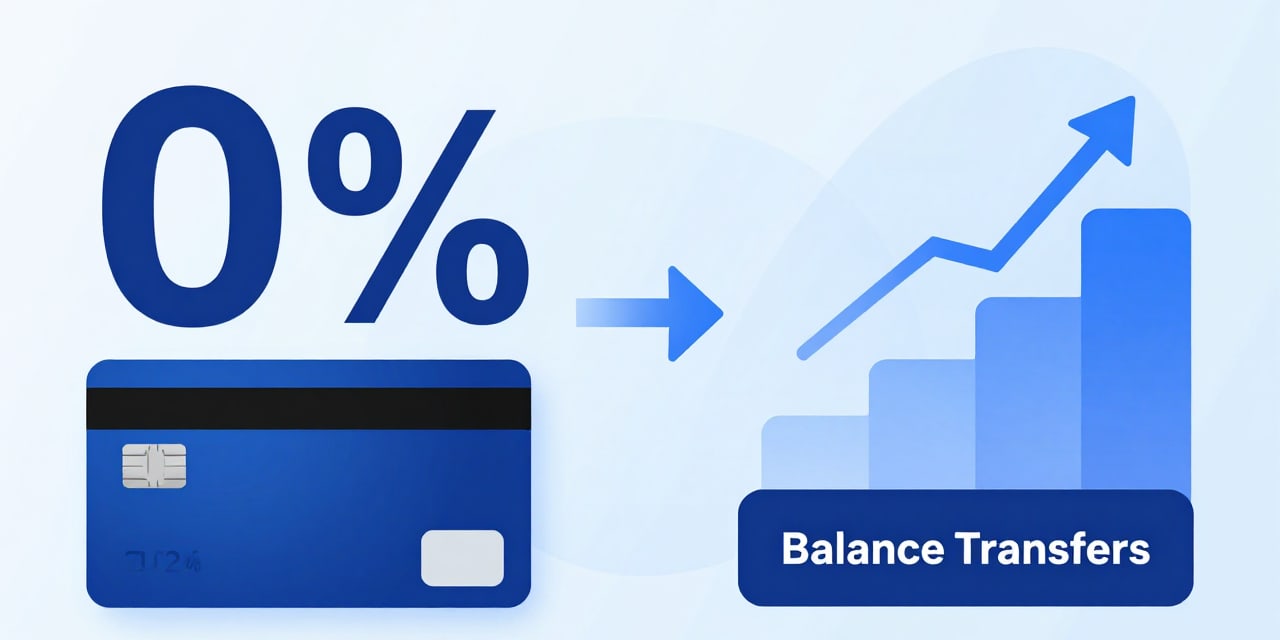
When you're managing credit card debt or planning a large purchase, the terms 0% Intro APR Credit Cards vs. Balance Transfers in 2026 often come up. Both can help you save money on interest, but they serve different purposes. Understanding the distinction is key to using them effectively without falling into common traps.
The first thing to clarify is that not all 0% intro APR cards are the same. Some offer a 0% annual percentage rate on purchases, meaning you can buy items and pay no interest for a set period. Others offer 0% APR on balance transfers, which lets you move existing debt from another card and pay it down without accruing interest during the intro period. In 2026, many cards still offer both, but the length of the intro period and the fees can vary significantly.
Key Differences Between 0% Intro APR Cards and Balance Transfer Cards
- Purpose: Purchase intro APRs are for new spending, while balance transfer intro APRs are for paying off existing debt.
- Fees: Balance transfers typically incur a fee of 3% to 5% of the amount transferred, whereas purchases usually have no extra fee.
- Intro Period: Some cards offer a longer intro period for purchases than for transfers, or vice versa. Always read the terms.
- Interest on Remaining Balance: Once the intro period ends, any remaining balance starts accruing interest at the regular APR, which can be high.
- Payment Allocation: If your card has both purchase and transfer balances, payments may be applied to the lower-interest balance first, affecting how much interest you actually pay.
When comparing 0% Intro APR Credit Cards vs. Balance Transfers in 2026, think about your financial goal. If you're planning a big purchase, like furniture or a vacation, a card with a 0% intro APR on purchases gives you time to pay it off without interest. On the other hand, if you have high-interest credit card debt, a balance transfer card can consolidate that debt and help you pay it down faster—provided you can clear the balance before the intro period ends.
One common mistake is assuming that all 0% offers are free money. Balance transfer fees can eat into your savings. For example, if you transfer $5,000 with a 5% fee, you owe $250 upfront. In 2026, some cards offer no transfer fees, but they might have shorter intro periods. Similarly, with purchase intro APRs, interest may start accruing immediately if you carry a balance beyond the promo window, and it may even be retroactive on some older card agreements—though most modern cards make interest prospective, not retroactive.
To make the best choice, calculate your break-even point. Compare the balance transfer fee against the interest you'd otherwise pay on your current card. For purchases, estimate how long it will take you to pay off the item and choose a card with an intro period that covers that timeline. Also, check your credit score—the best 0% intro APR offers in 2026 typically require good to excellent credit. Finally, set up automatic payments to ensure you pay at least the minimum each month, and aim to pay off the entire balance before the intro period expires.
In summary, 0% Intro APR Credit Cards vs. Balance Transfers in 2026 is not an either-or question. Many cards combine both features, but you should evaluate them separately based on your spending and debt repayment needs. Always read the fine print, understand the fees and timelines, and use a payoff plan to fully benefit from the interest-free window. With careful planning, these tools can be powerful ways to save money and improve your financial health.